

Trail Running Injury Treatment in Stowe, Vermont
Performance-based treatment for trail-specific running injuries serving Stowe, Morrisville, Waterbury, and surrounding communities.
If your symptoms are more related to mileage or mechanics on the road, our Running Injury Treatment page may be a better starting point. This page focuses specifically on injuries related to technical trail terrain.
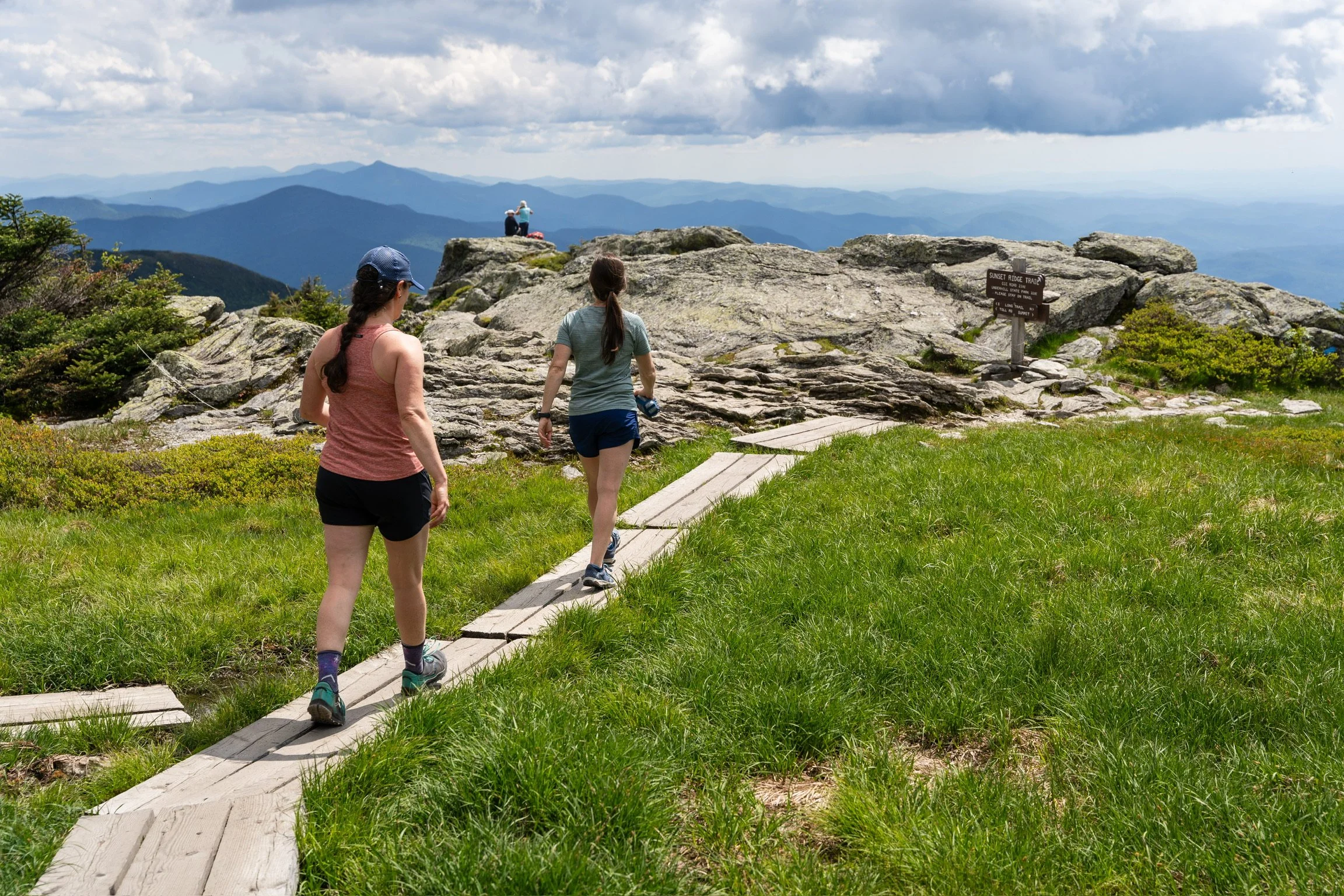
Trail running around Stowe means roots, rocks, mud, and steep, technical descents — terrain that loads the body very differently than a road or a track. An ankle that rolls on uneven footing. A knee that aches specifically on the way down a mountain, not the way up. A hip or calf that fatigues faster on technical singletrack than on a flat run.
At Summit PT, trail running injury treatment focuses on the demands specific to Stowe's trail network: uneven footing, sustained descents, and the vertical gain and loss that road running simply doesn't ask of the body.
Effective treatment starts with understanding what the terrain itself is doing to your movement.
Why Trail-Specific Running Injuries Develop
Trail running injuries often show up in patterns that road runners don't experience as often — ankle instability on uneven ground, knee pain that's specifically worse on descents, or calf and quad fatigue that builds faster on technical terrain than flat mileage would predict.
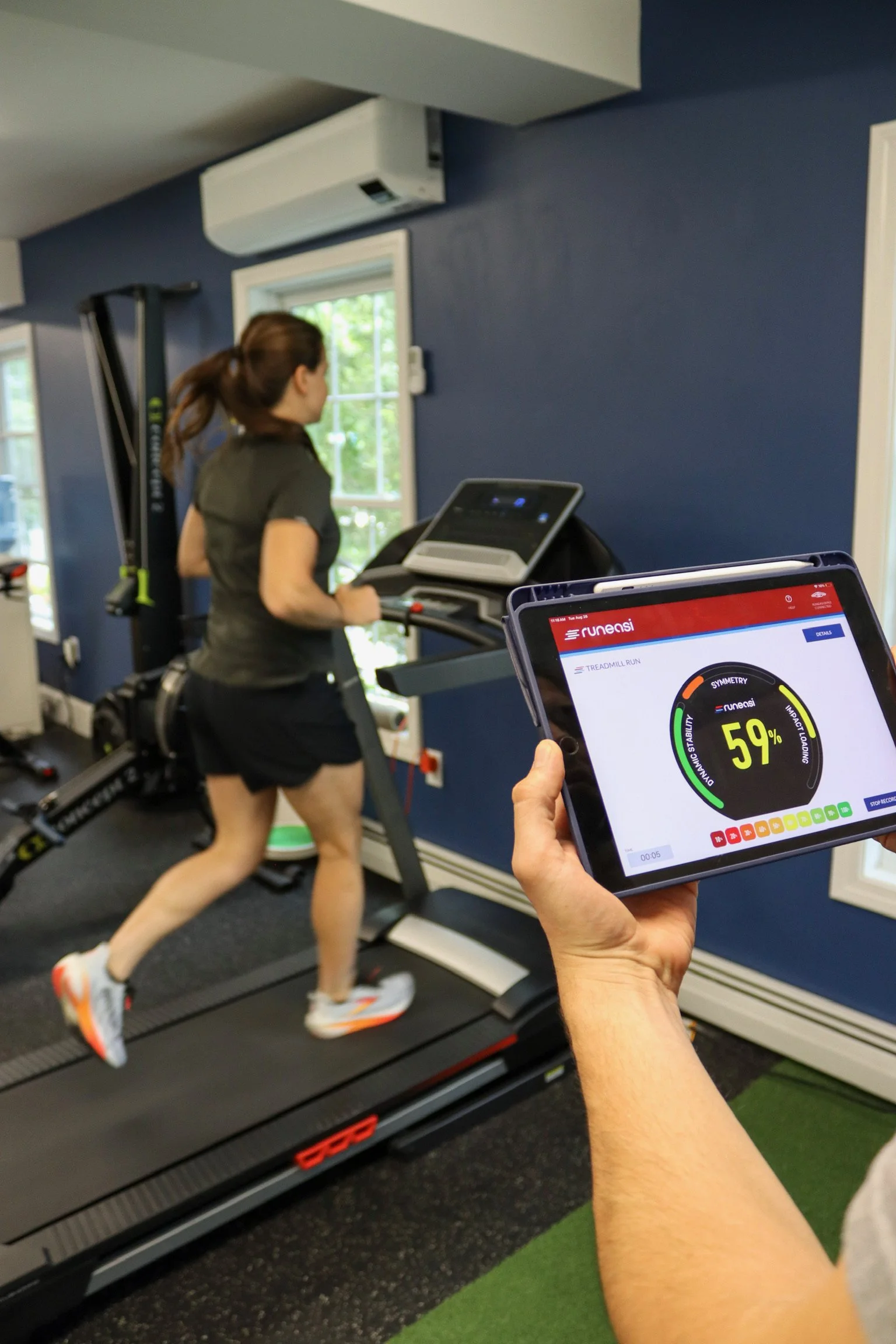
Common contributing factors include:
reduced ankle stability and proprioception on roots, rocks, and uneven footing
limited eccentric quad control needed to absorb repeated, steep descents
fatigue-related loss of form deeper into a technical run than on the road
hip and core control gaps that become more apparent on uneven, unpredictable terrain
rapid increases in vertical gain or technical mileage without a base to support it.
Descents are where most trail-specific symptoms concentrate, since controlling a downhill on rocky, root-covered singletrack demands far more eccentric strength and joint control than climbing or flat running.
How Physical Therapy Helps Trail-Specific Running Injuries
Slowing down on technical sections or avoiding certain trails might reduce symptoms in the moment, but it doesn't build the eccentric strength and stability that technical terrain demands.
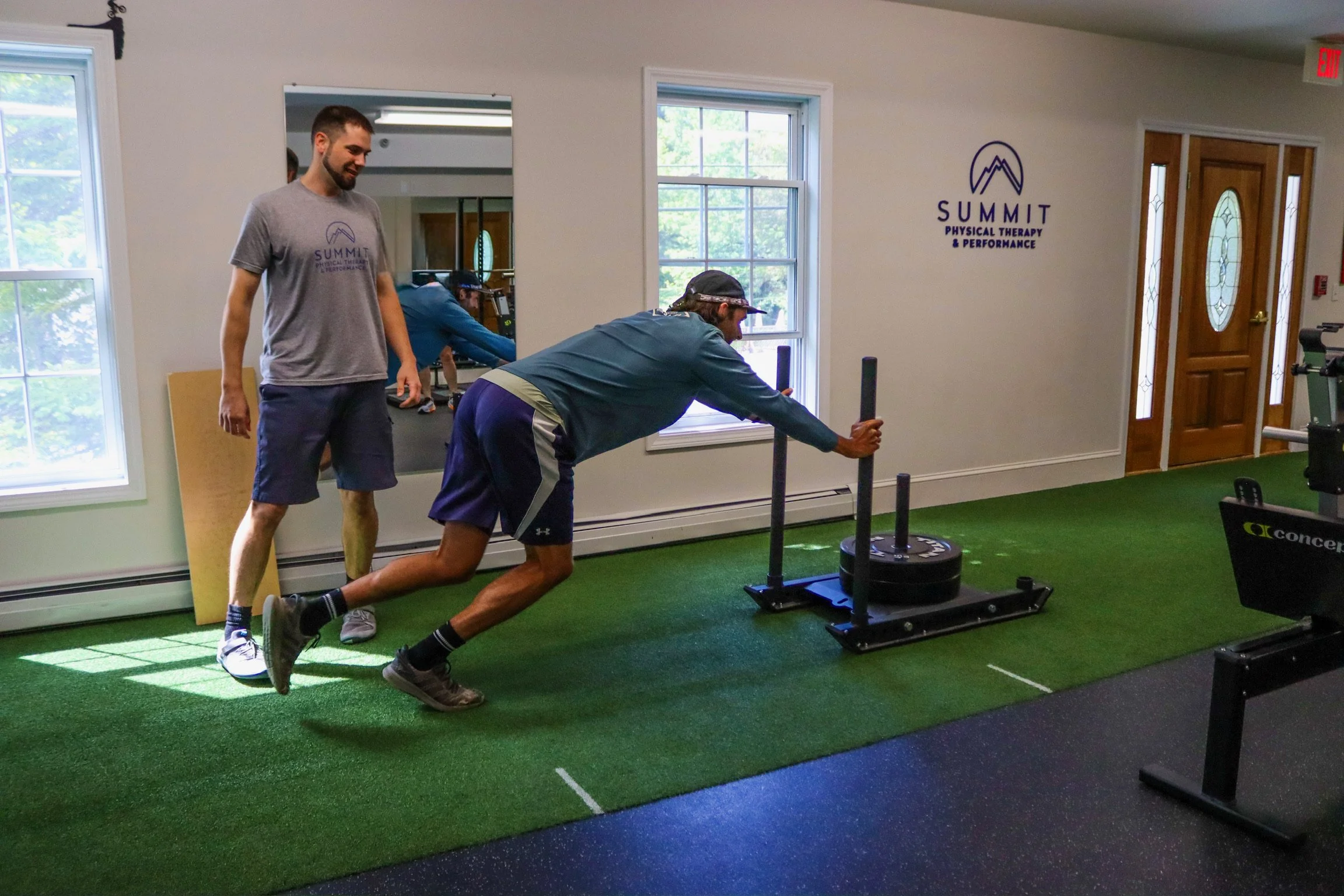
Physical therapy for trail running injuries focuses on rebuilding ankle stability, single-leg control, and eccentric strength for descents — the specific capacities that separate confident technical running from constant close calls.
Rather than avoiding your favorite trails, we help you build the strength and control to handle them.
The goal isn't just resolving this injury. It's building the durability to handle a full season of technical trail running.
Don’t just take our word for it
SEE WHAT ONE OF OUR CLIENTS HAS TO SAY…

At Summit PT, treatment is built around the specific demands of endurance athletes.
The Summit Approach to Trail Running Injury Treatment
Early priorities include:
identifying whether symptoms are terrain-related (descents, footing) or more general running-related
restoring pain-free movement and confidence on uneven ground
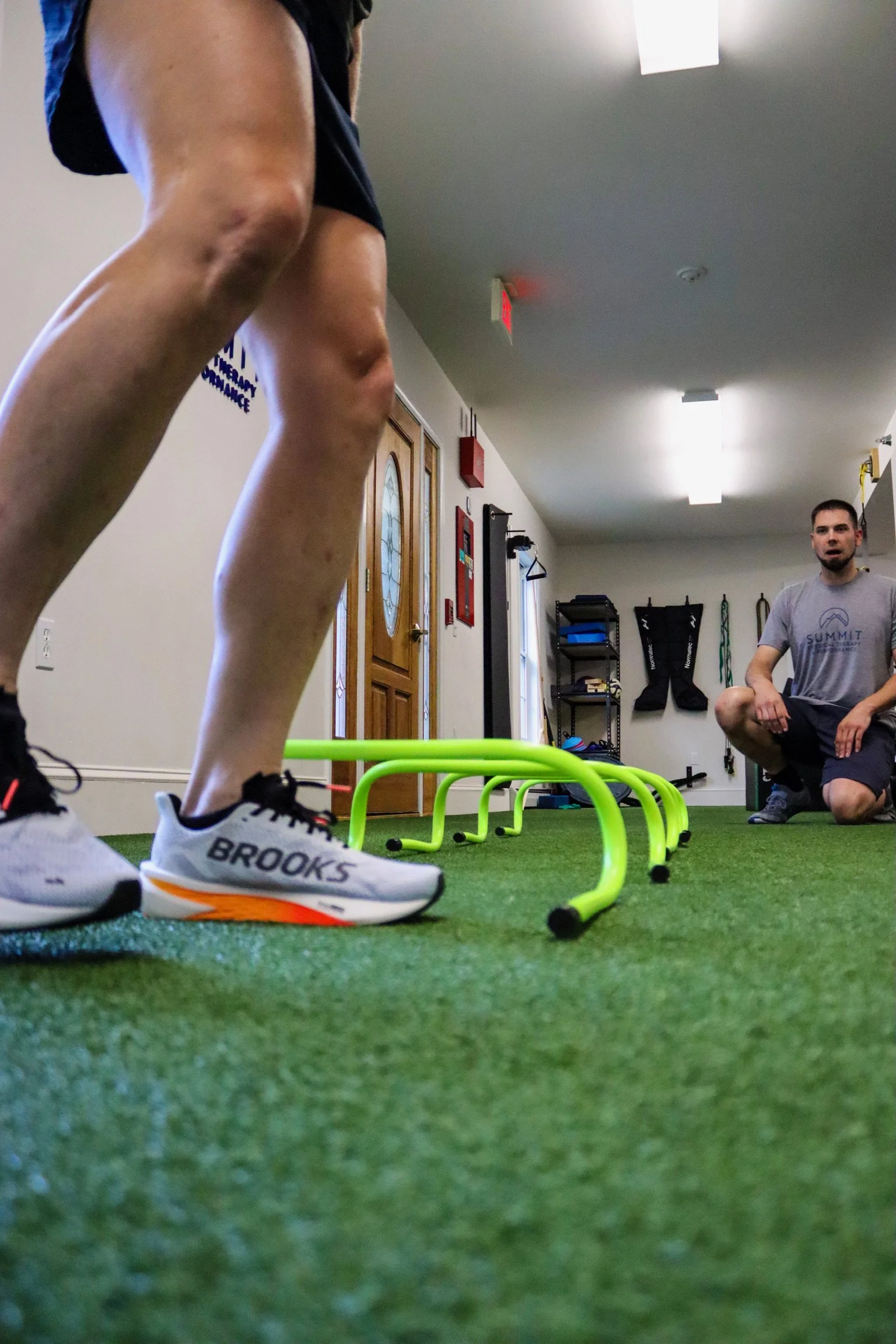
progressive ankle stability and proprioception training
building eccentric quad and hip strength specific to sustained descents
a graded return to technical terrain, not just flat mileage.
We also address common misconceptions. Rolling an ankle once doesn't mean your ankles are inherently unstable. Knee pain on descents doesn't always mean structural damage. And avoiding technical trails altogether often leaves the underlying strength and control deficits unaddressed.
Our focus is reducing risk, rebuilding strength, and helping you run technical terrain with confidence.
Serving Patients Across Nearby Vermont Communities
In addition to Stowe, Summit Physical Therapy regularly works with patients from Waterbury, Morrisville, Hyde Park, Cambridge, Jeffersonville, and surrounding Vermont communities. Many people travel to Stowe for specialized physical therapy care that supports an active lifestyle, outdoor recreation, and long-term movement goals.
What to Expect at Your First Visit
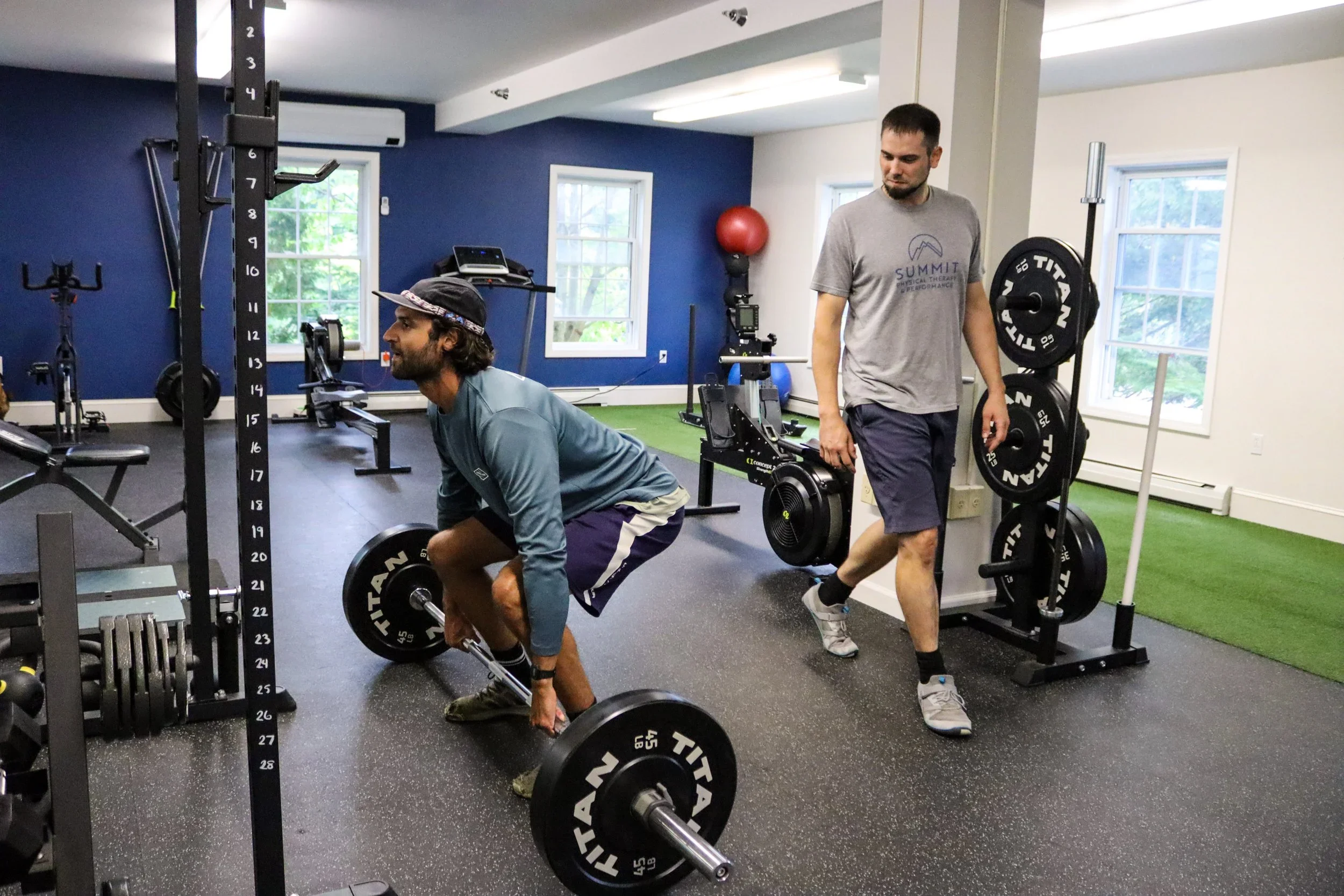
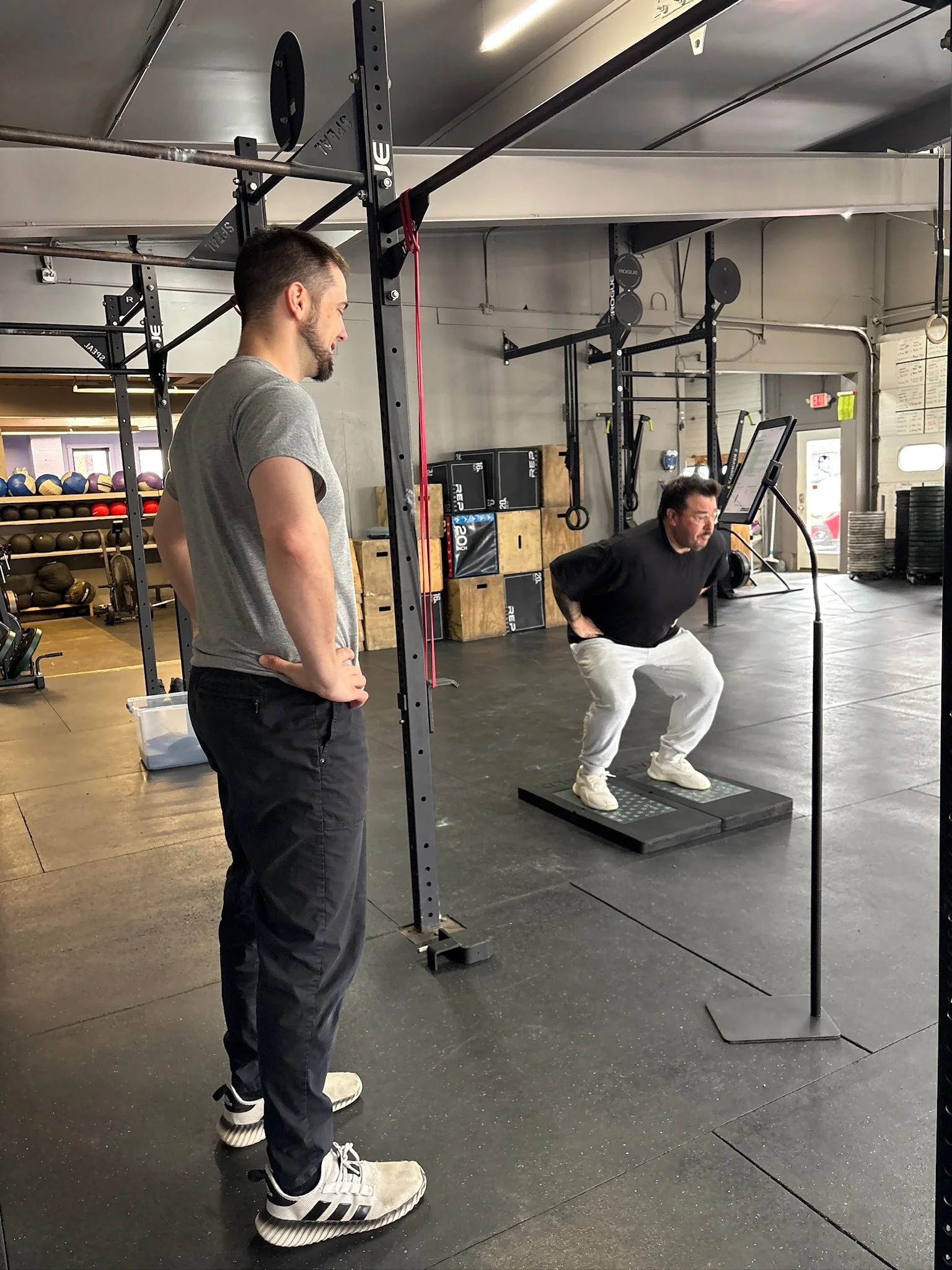
Your first visit begins with a detailed discussion of your symptoms, training history, and goals. We assess strength, mobility, running-related movement patterns, and factors that may be contributing to your symptoms.
You will leave your first session with:
A clear understanding of what is driving your symptoms
Guidance on training modifications when needed
Targeted exercises specific to your presentation
A structured progression plan for returning to running
You should leave knowing exactly what steps will move you toward consistent training again.
How it Works
OUR PROCESS
01
We want to make sure we are the best fit to help you reach your goals. This free 15 minute phone call can be scheduled through the link above, or just give us a call!
Free Discovery Call
02
Initial Evaluation
Meet 1 on 1 with a provider who will take you through a series of strength and mobility testing to determine the root cause of your problem.
03
Plan of Care
You and your provider will determine the best course of action to solve your problem and get you back to activity as quickly as possible.
Who This Is a Strong Fit For
This approach is particularly effective for:
trail runners with ankle instability or recurring rolled ankles on technical terrain
runners whose knee pain is specifically worse on descents
anyone building toward a longer or more technical race and wanting a durable base
runners who've noticed hip, calf, or quad fatigue builds faster on trails than on the road
anyone whose pain is more related to overall running mechanics or mileage than to terrain itself
If you're looking for performance-driven treatment built around Stowe's actual trail network, rather than generic running advice, this model is designed for you.
Run Stowe's Trails with Confidence
Technical terrain shouldn't mean choosing between the trails you love and staying pain-free.
If you're dealing with an injury from Stowe's singletrack, Summit PT works with trail runners throughout Stowe and surrounding communities to rebuild the strength and stability technical terrain demands.
Schedule your evaluation today and start building toward confident, durable trail running.
-
Recurring ankle rolls on uneven terrain often point to reduced ankle stability and proprioception rather than bad luck, and targeted balance and strength work can meaningfully improve it.
-
Not necessarily harder, but different — descents on technical terrain demand more eccentric quad control, which is where trail-specific knee pain often shows up.
-
The core principles overlap, but trail-specific treatment puts more emphasis on ankle stability, eccentric strength for descents, and control on uneven footing.
-
Reducing volume on the terrain that's aggravating symptoms is often reasonable short-term, but avoiding descents indefinitely doesn't rebuild the strength needed to handle them again.
-
This depends on the injury and how it responds to treatment, but a structured, progressive return to uneven terrain is what determines readiness, not a fixed timeline.