
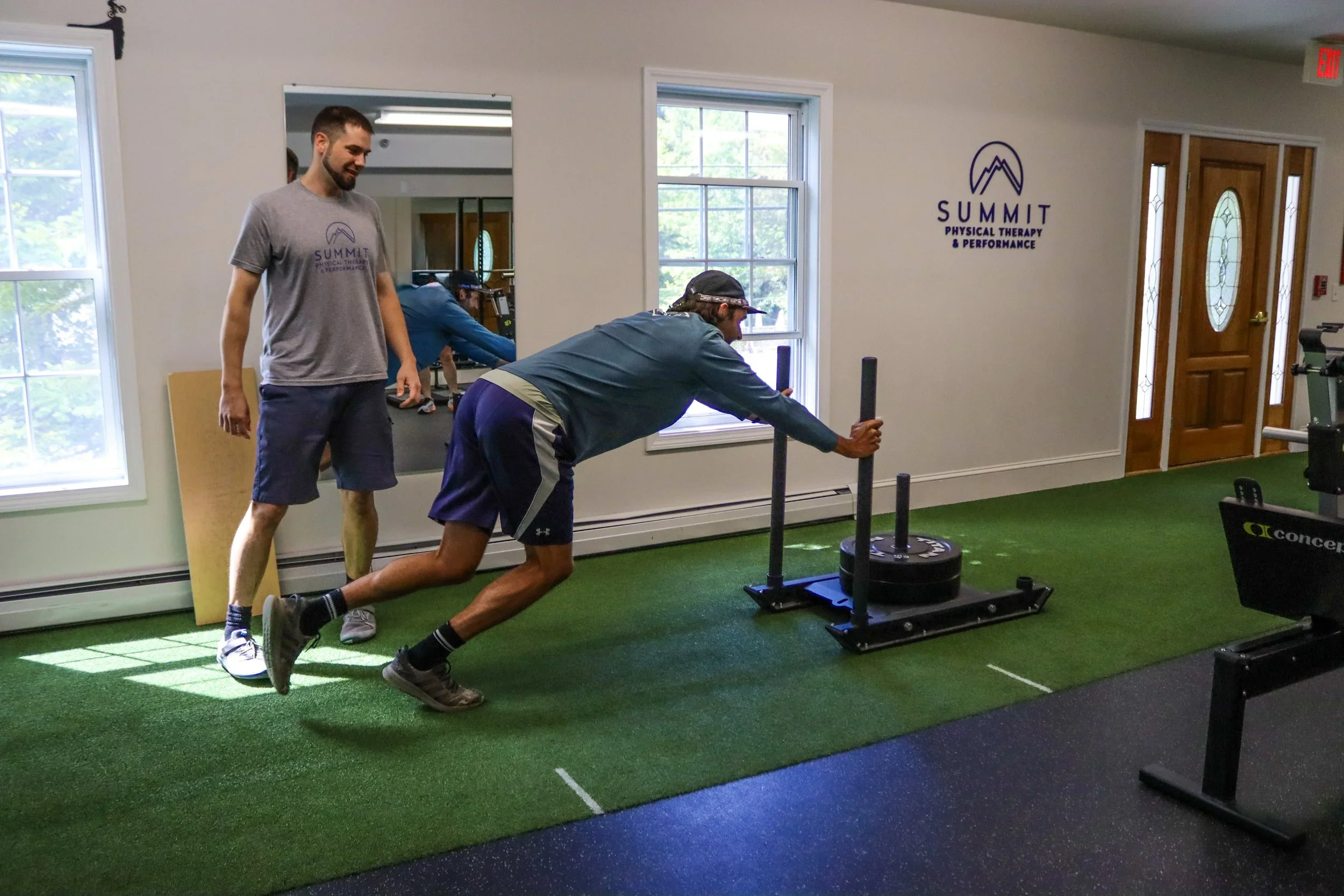
ACL Rehab / Return to Sport in Stowe, Vermont
High-quality rehab can make the difference between long-term success and a frustrating re-tear.
ACL rehab is not the time to settle for “good enough” care.
ACL rehab at Summit PT is not generic physical therapy. It is a performance-driven, data-informed process designed for athletes and active adults who want to return to sport with confidence, strength, and reduced reinjury risk.
We specialize in ACL rehabilitation and return-to-sport testing using advanced technology, objective measurements, and progressive training strategies that go far beyond what most clinics offer.
30% of athletes experience a re-tear when returning to sport simply because they get cleared too early, without passing a rigorous enough return to sport assessment.
With the journey lasting anywhere from 9-18 months, having expert guidance is crucial for the best outcomes and to come back stronger than ever.
What Makes Our ACL Rehab Different
Many physical therapy clinics base progress on time since surgery or basic strength checks. While those milestones matter, they do not tell the full story of whether someone is truly ready to return to sport.
At Summit PT, we use objective performance data and sport-specific testing to guide every phase of your rehab. Our goal is not just to get you cleared. Our goal is to get you back stronger, more resilient, and better prepared than before your injury.
Advanced Testing and Technology
-
Manual muscle testing is subjective and often misses meaningful side-to-side differences. We use dynamometer-based strength testing to precisely measure quadriceps and hamstring strength and identify asymmetries that increase reinjury risk.
This allows us to:
Track true strength progress over time
Ensure appropriate limb symmetry before advancing phases
Make data-backed return-to-sport decisions
-
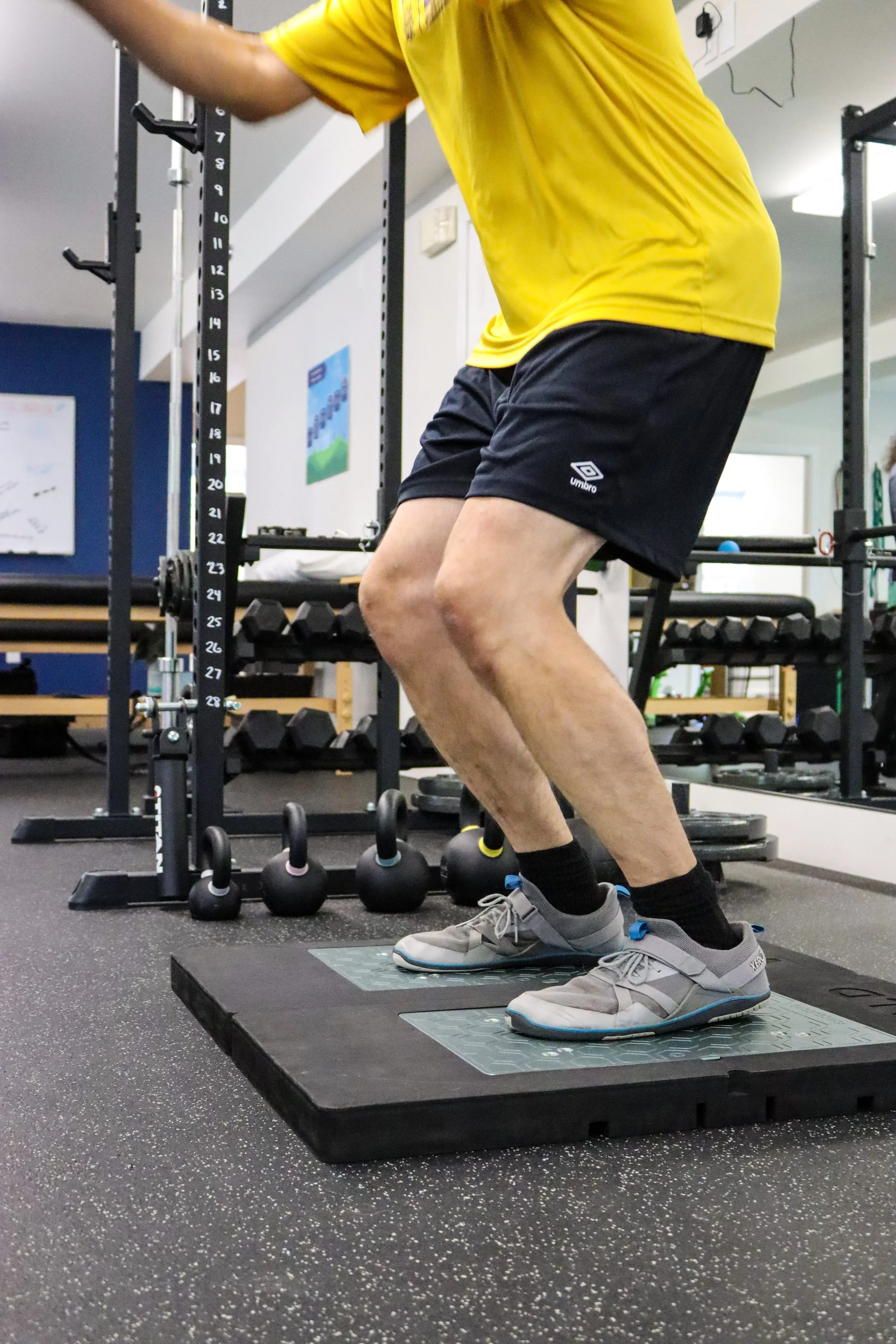
Returning to sport requires the ability to absorb and produce force efficiently on one leg. Using VALD Force Plates, we assess structured jump and hop testing that looks at:
Single-leg hop performance
Multi-directional power
Limb symmetry and landing control
Fatigue-related changes in movement
These tests give us insight into real-world readiness for running, cutting, and jumping.
-
How you move matters just as much as how strong you are. We analyze mechanics during squatting, jumping, running, and change-of-direction tasks to identify:
Compensations that increase injury risk
Poor loading strategies on the surgical limb
Movement patterns that need retraining before return to sport
This is especially important for athletes returning to pivoting and cutting sports.
-
Confidence plays a major role in successful ACL recovery. Fear of reinjury is one of the strongest predictors of delayed or unsuccessful return to sport. We assess psychological readiness alongside physical performance so we can address both the mental and physical components of recovery.
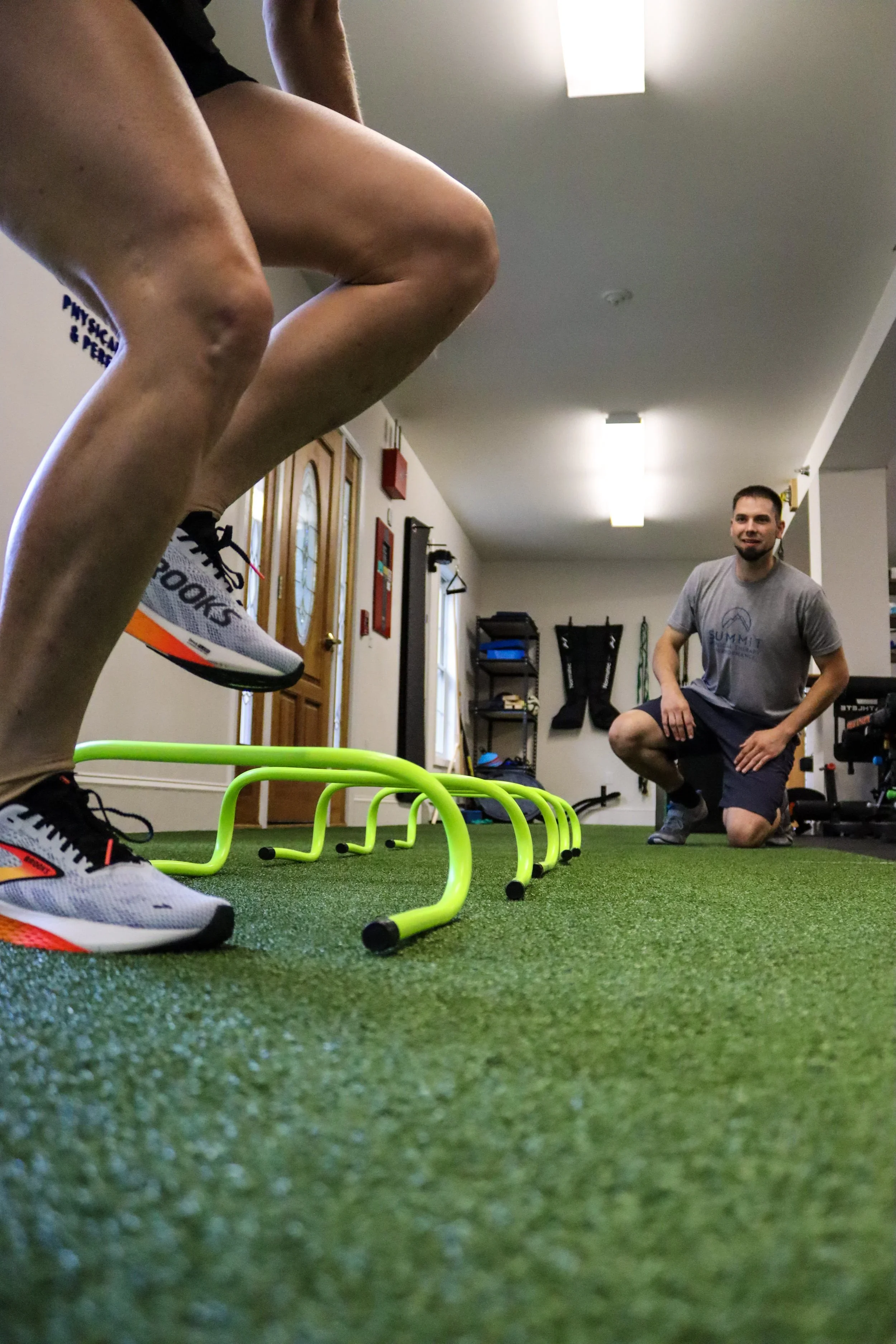
Your rehab progression is based on what your body can do, not just how many weeks it has been since surgery.
We guide you through:
Early post-op recovery focused on swelling control, mobility, and quad activation
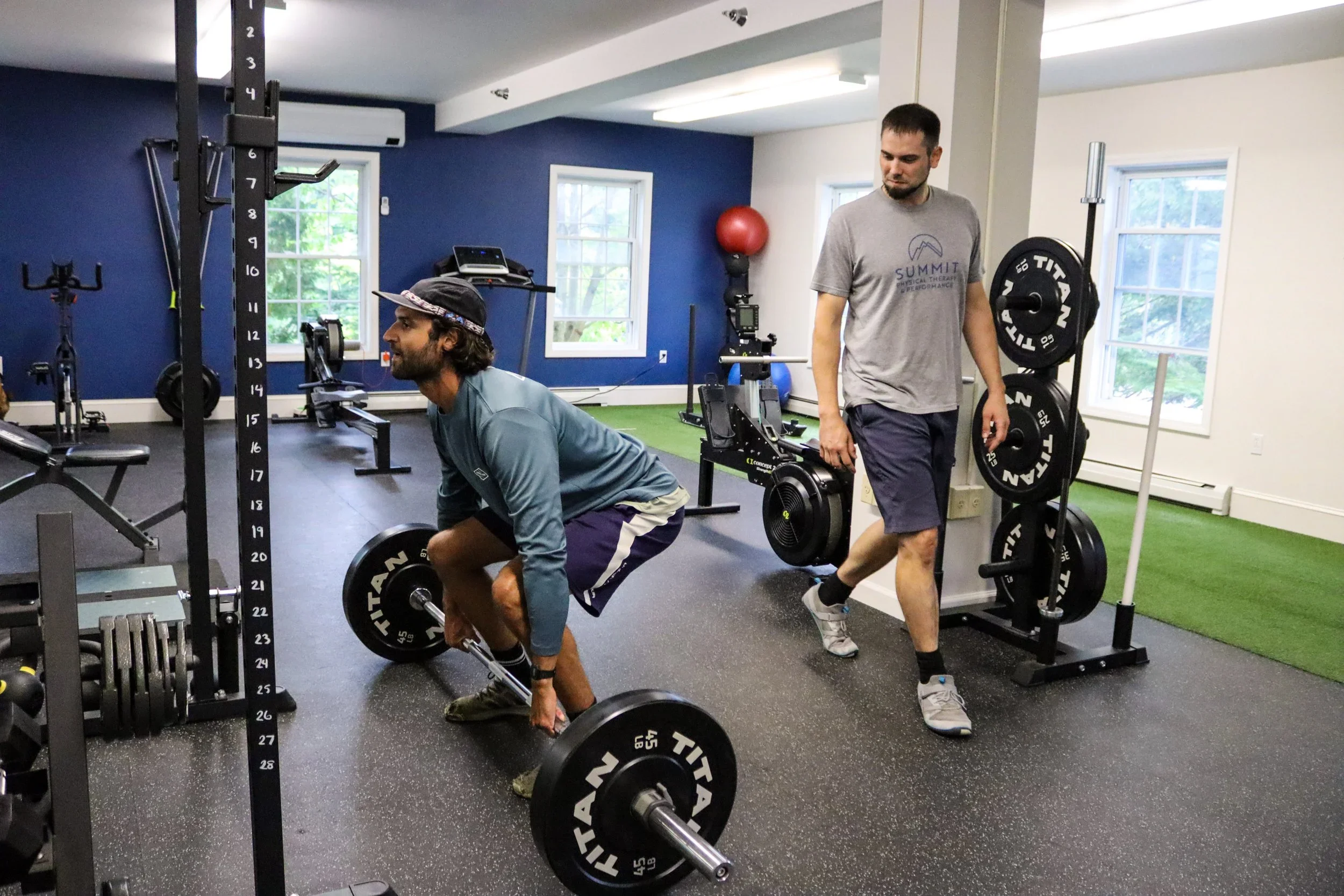
Progressive strength development with an emphasis on quadriceps, hamstrings, and trunk control
Plyometrics and power training to prepare for sport demands
Agility, deceleration, and change-of-direction work specific to your sport
Structured return-to-running and sport-specific progressions
Each phase is unlocked by meeting objective criteria, not by the calendar.
OUR PROCESS
How our ACL Rehabilitation Program Works
01
We want to make sure we are the best fit to help you reach your goals. This free 15 minute phone call can be scheduled through the link above, or just give us a call!
Free Discovery Call
02
Initial Evaluation
Meet 1 on 1 with a provider who will take you through a series of strength and mobility testing to determine the root cause of your problem.
03
Plan of Care
You and your provider will determine the best course of action to solve your problem and get you back to activity as quickly as possible.
Working with Patients Across the Stowe Area
Summit Physical Therapy regularly works with patients from Waterbury, Morrisville, Hyde Park, Cambridge, and nearby communities who are seeking one-on-one care in Stowe for running injuries, orthopedic rehab, pelvic health concerns, and performance-focused physical therapy.

Frequently Asked Questions
-
ACL rehabilitation timelines vary based on the severity of the injury and whether surgery was performed. Many athletes require several months of progressive rehabilitation before safely returning to sports. Your physical therapist will monitor your progress and adjust your program throughout recovery.
-
Yes. Physical therapy is an essential part of recovering from ACL reconstruction. Rehabilitation focuses on restoring knee mobility, strength, balance, coordination, and confidence while preparing you for a safe return to sports and daily activities.
-
Return-to-sport decisions are based on objective testing rather than time alone. Your physical therapist evaluates strength, balance, movement quality, functional performance, and sport-specific skills to determine when it's appropriate to return safely.
-
Some ACL injuries can be managed without surgery depending on the severity of the tear, your activity level, and your goals. A physical therapist can evaluate your condition and help determine whether conservative rehabilitation is an appropriate option.
-
Many patients successfully return to activities such as skiing, soccer, basketball, trail running, hiking, and other sports after completing a comprehensive rehabilitation program. Your return will depend on meeting strength, stability, and functional milestones rather than a fixed timeline.