
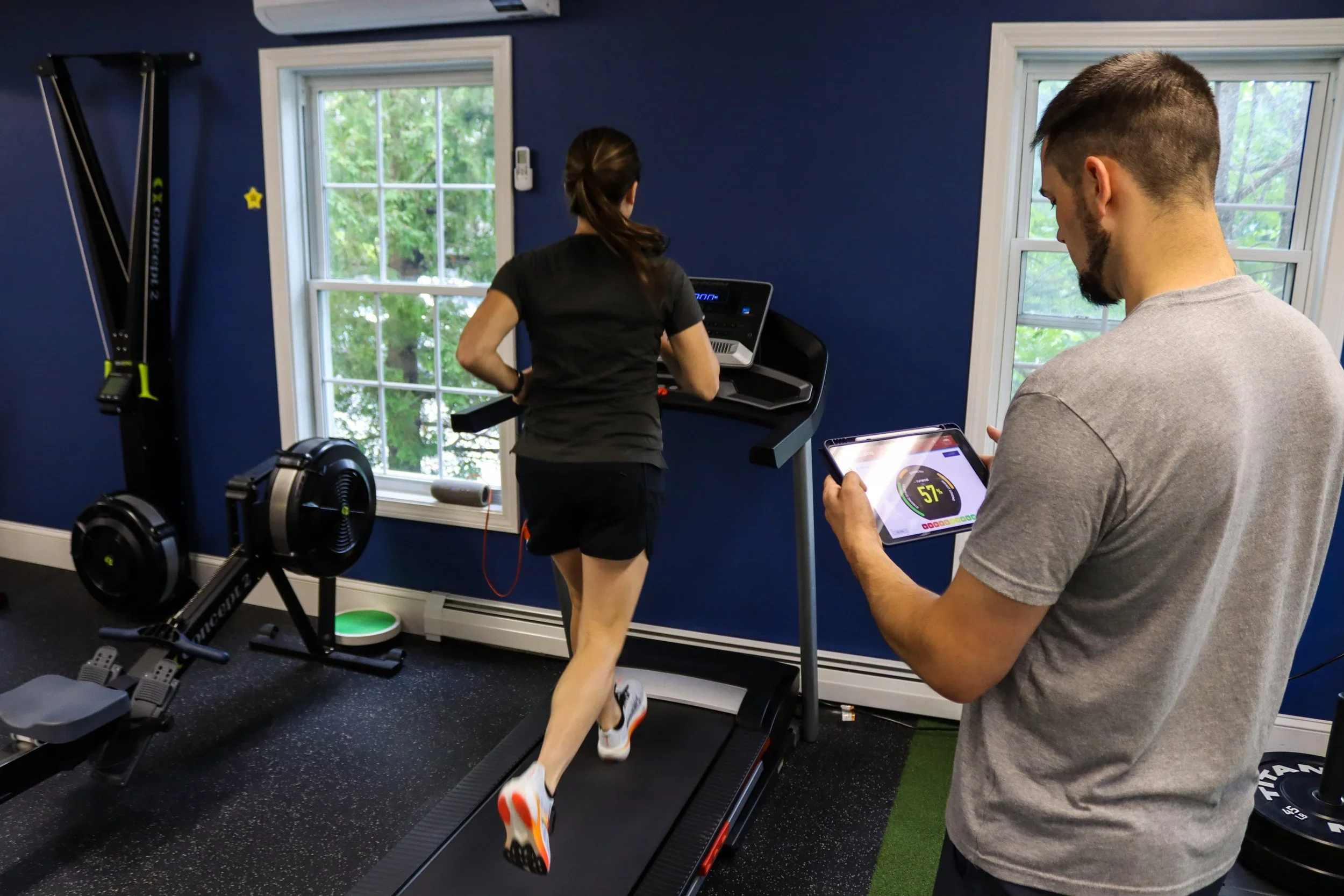
Running Assessment & Gait Analysis in Stowe, Vermont
Analyze your stride. Get better output.
A running assessment is a comprehensive evaluation of how your body moves while you run. At Summit Physical Therapy, we combine advanced technology with clinical expertise to understand your running mechanics, identify inefficiencies, and develop personalized recommendations that support better performance and long-term health.
Whether you're training for your first 5K, preparing for an ultramarathon, returning from an injury, or simply looking to run more efficiently, a running assessment provides objective data that helps guide smarter training decisions.
Unlike a basic gait analysis, our assessment evaluates how strength, balance, mobility, force production, and running mechanics work together. This allows us to identify movement patterns that may be limiting your performance or contributing to recurring injuries.
What is a Running Assessment?
OUR PROCESS
What Does a Running Assessment Include?
Every running assessment at Summit Physical Therapy follows a structured, performance-focused process designed to evaluate how your body moves under real running conditions.
Your assessment includes:

Using the Runeasi 3D gait analysis system, we capture detailed data on pelvic movement, impact forces, cadence, symmetry, and other key running metrics while you run on a treadmill. This technology allows us to identify subtle movement patterns that aren't always visible to the naked eye.
3D Running Gait Analysis
Force Plate Testing
VALD force plates measure balance, power, and force production during functional movements. These objective measurements help identify asymmetries that may affect running efficiency or increase injury risk.
Strength Assessment
We use the VALD Dynamo system to evaluate muscle strength and compare side-to-side differences. Identifying strength deficits allows us to develop targeted recommendations that support better performance and more efficient movement.
Clinical Movement Evaluation
Technology is only one part of the assessment. Your physical therapist also evaluates mobility, flexibility, movement quality, training history, previous injuries, and running goals to understand the complete picture.
Personalized Recommendations
After reviewing your results, we explain what the data means and provide individualized recommendations that may include strength exercises, mobility work, running form modifications, training adjustments, or rehabilitation strategies based on your goals.
PRICING
$299 for 1-hour running assessment
*Current patients: elements of this assessment may be incorporated into your ongoing evaluation or treatment—chat with your provider to see how it fits your care plan.
Book a free 15 minute phone consultation today!
Who Can Benefit From a Running Assessment?
A running assessment is valuable for runners of all experience levels—not just those recovering from injury.
Many people schedule a running assessment if they:
Are training for a race
Want to improve running efficiency
Experience recurring running injuries
Recently returned from an injury
Are increasing mileage
Want to improve performance
Feel pain while running
Are new to running and want to build good habits from the start
Whether you run on the roads around Stowe, explore Vermont's trail systems, or train for competitive events, understanding how your body moves can help you make more informed training decisions.
Working with Patients Across the Stowe Area
Summit Physical Therapy regularly works with patients from Waterbury, Morrisville, Hyde Park, Cambridge, and nearby communities who are seeking one-on-one care in Stowe for running injuries, orthopedic rehab, pelvic health concerns, and performance-focused physical therapy.


Why Choose Summit Physical Therapy for a Running Assessment?
At Summit Physical Therapy, running assessments are performed by licensed physical therapists who understand both injury rehabilitation and performance optimization. Rather than simply identifying movement patterns, we explain how those findings relate to your goals and create practical recommendations you can immediately apply to your training.
Because our team regularly works with runners throughout Stowe, Waterbury, Morrisville, Hyde Park, and surrounding Vermont communities, we understand the unique demands of road running, trail running, mountain terrain, and endurance sports.
Frequently Asked Questions
-
A running assessment includes a 3D gait analysis, force plate testing, strength measurements, and a clinical movement evaluation. Your physical therapist reviews the results with you and provides personalized recommendations to improve running efficiency, reduce injury risk, and support your training goals.
-
Running assessments are appropriate for runners of all experience levels, from beginners to experienced competitors. Whether you're recovering from an injury, training for a race, increasing mileage, or simply looking to improve performance, a running assessment provides valuable insight into how your body moves.
-
Yes. While no assessment can guarantee injury prevention, identifying movement inefficiencies, strength deficits, and asymmetries early can help reduce the risk of common running injuries such as IT band syndrome, runner's knee, Achilles tendinopathy, and plantar fasciitis.
-
No. Many runners schedule a running assessment to improve efficiency, monitor performance, or prepare for upcoming races. Understanding your running mechanics before pain develops can help you train more effectively and make informed adjustments to your program.